Cortico on Campus: Change Starts with a Small Conversation



June 1, 2026
Cortico on Campus brings Cortico’s approach of small-group conversations at scale to college campuses. Launched in spring 2025 with support from The Rockefeller Foundation, and expanded in fall 2025 through spring 2026, young people have been leading recorded conversations at their schools, on topics that matter to them, surfacing and making sense of what their peers really have to say.
Shania Dhanaraj and Sam Wood are two fellows part of the pilot cohort, who returned this past academic year — their senior years — as lead fellows, helping further shape the program alongside a new group of students.
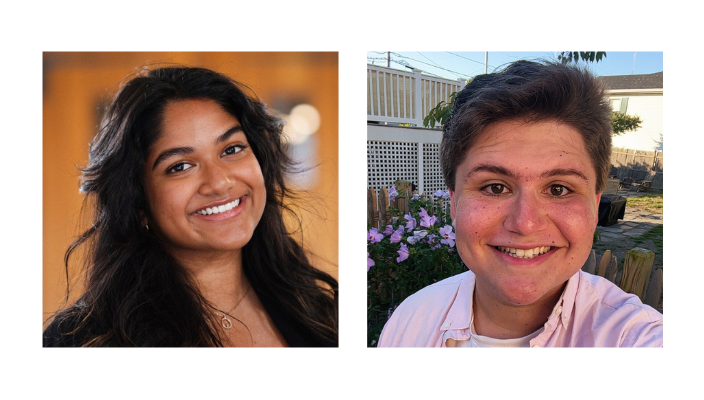
Sam, a Political Science and Environmental Studies major at the University of Wisconsin, led conversations that explored uncertainty — navigating change, changing majors, identities, and expectations — with the aim to normalize ambiguity and create space for students to sit with uncertainty together.
Shania, an Industrial & Labor Relations major at Cornell, explored her peers’ relationship with technology and disconnection, and what happens when students finally unplug — partaking in a 24 hour digital detox and reflecting together on that experience.
Both had a lot to say about what this approach made possible that others don’t. As Shania described:
“Small-group conversations do something that most campus spaces do not: they allow you to get to know and understand the person behind the thought. Students can comfortably hesitate, change their minds mid-sentence, or offer an anecdote that completely shifts how you might see a situation. In these moments, the thought process becomes more collective and nuanced.”
Sam expressed that despite the technologies that surround us, and sometimes because of them, it can be hard to actually hear and be heard. And that lack of connection often shows up on college campuses too:
“In many forms of discourse, like social media, while everyone technically has the same ability and access to speak their mind, the power dynamics are uneven. Those with controversial opinions, pre-existing large followings, and the luck of the algorithm on their side rise above other voices. When everyone is put on a truly even playing field with equitable speaking time and mutual respect established, more beneficial conversations can occur.”
That equal footing was exactly what both fellows were trying to create on their campuses. Looking back, Shania reflected:
“This fellowship has given me more than just access to tools like the Cortico platform or conversation guides, but skills that transcend this program: asking better questions, listening to understand, and being mindful of whose voices are heard and whose are not.”
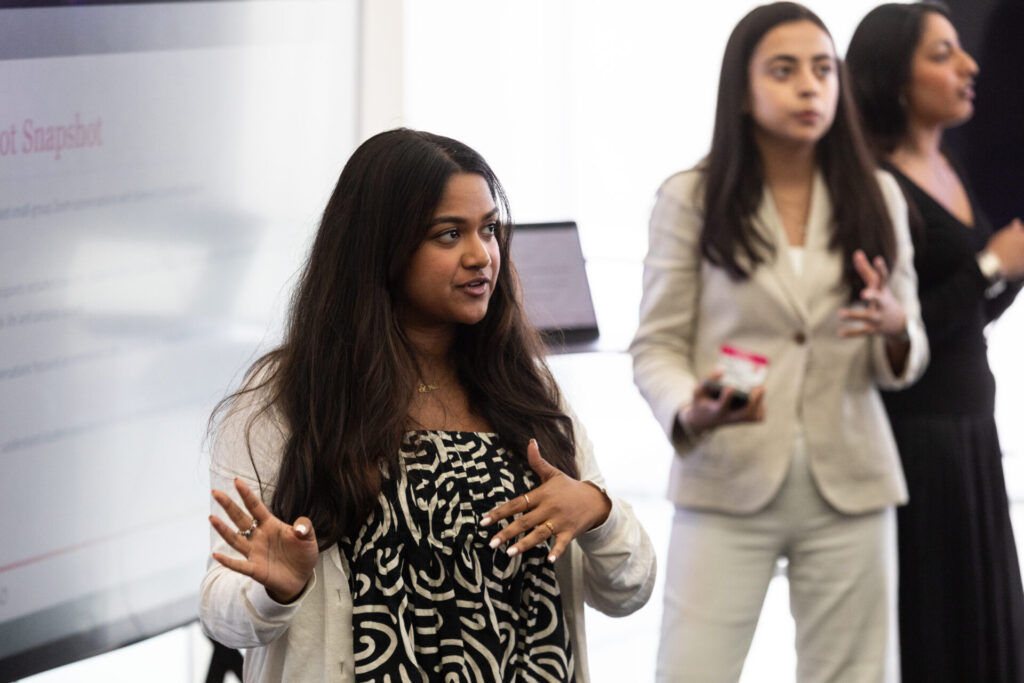
That mindfulness carried beyond Cornell. This past spring, Shania presented her work at Campus Compact 2026 in Chicago, bringing what she’d been building on campus into a national conversation about civic engagement and student leadership.
Sam, too, is thinking about what comes next:
“Innovative communication shouldn’t stop on college campuses. While I may not always be hosting recorded conversations with a conversation guide paving the way, I can apply the lessons I’ve learned and find ways to integrate these strategies in real-world situations.”
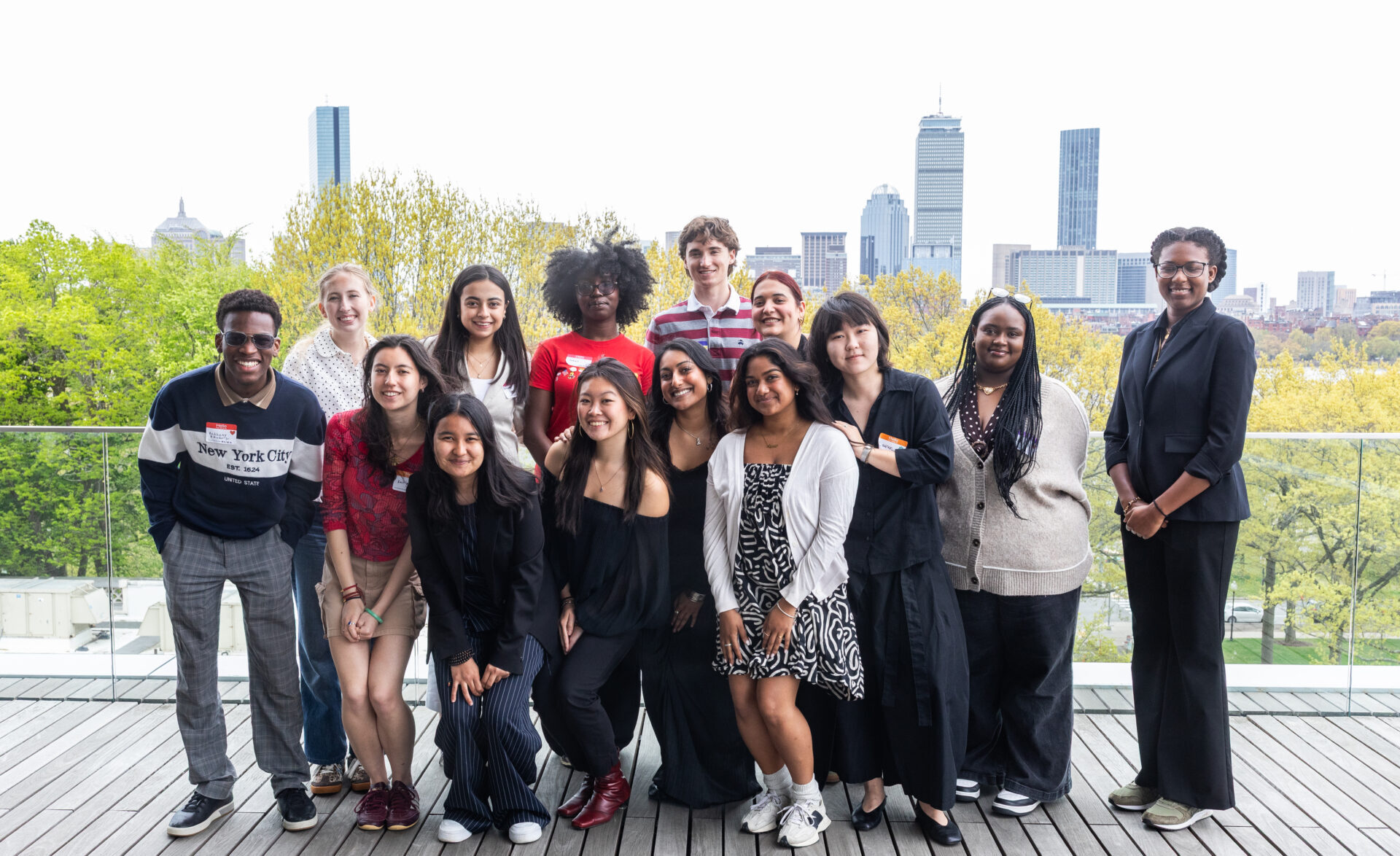
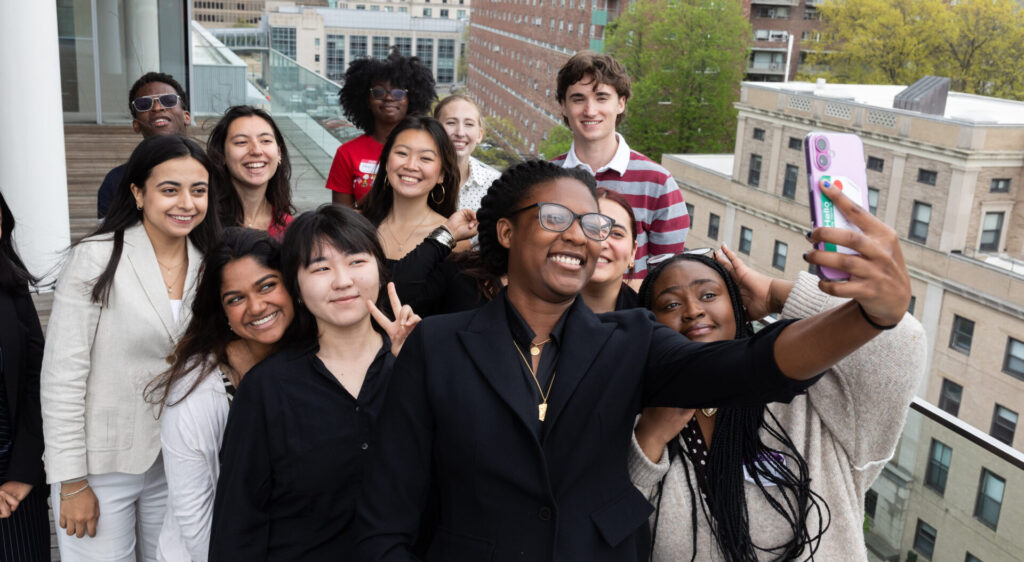
In May, a cohort of Cortico on Campus fellows gathered at the MIT Media Lab to present the conversation projects they’d been building on their campuses all year, and meet peers from across the country in-person for the first time. As fellow Didon Heri from the University of Southern Maine put it that day: “Change starts with a small conversation.”
Sam and Shania were part of Cortico on Campus from the very beginning. Their willingness to come back as lead fellows, helping shape the program for a new cohort while finishing their own senior years, says a lot about who they are. We’re grateful for everything they brought to this work and excited to see what they do next.
 Facebook
 Twitter
 LinkedIn
