
Zealous



These are voices from people who know the criminal justice system from the inside, and who have thought harder than most about what freedom really means.
Across six cities — from Chicago’s South Side to South LA, from Atlanta to Fresno — Zealous hosted small-group conversations with people directly impacted by the criminal legal system. The resulting portal organizes what they shared into themes: freedom, trust, healing, resilience, and what it would mean to reinvest in communities. Check out the the voices and stories behind each one.
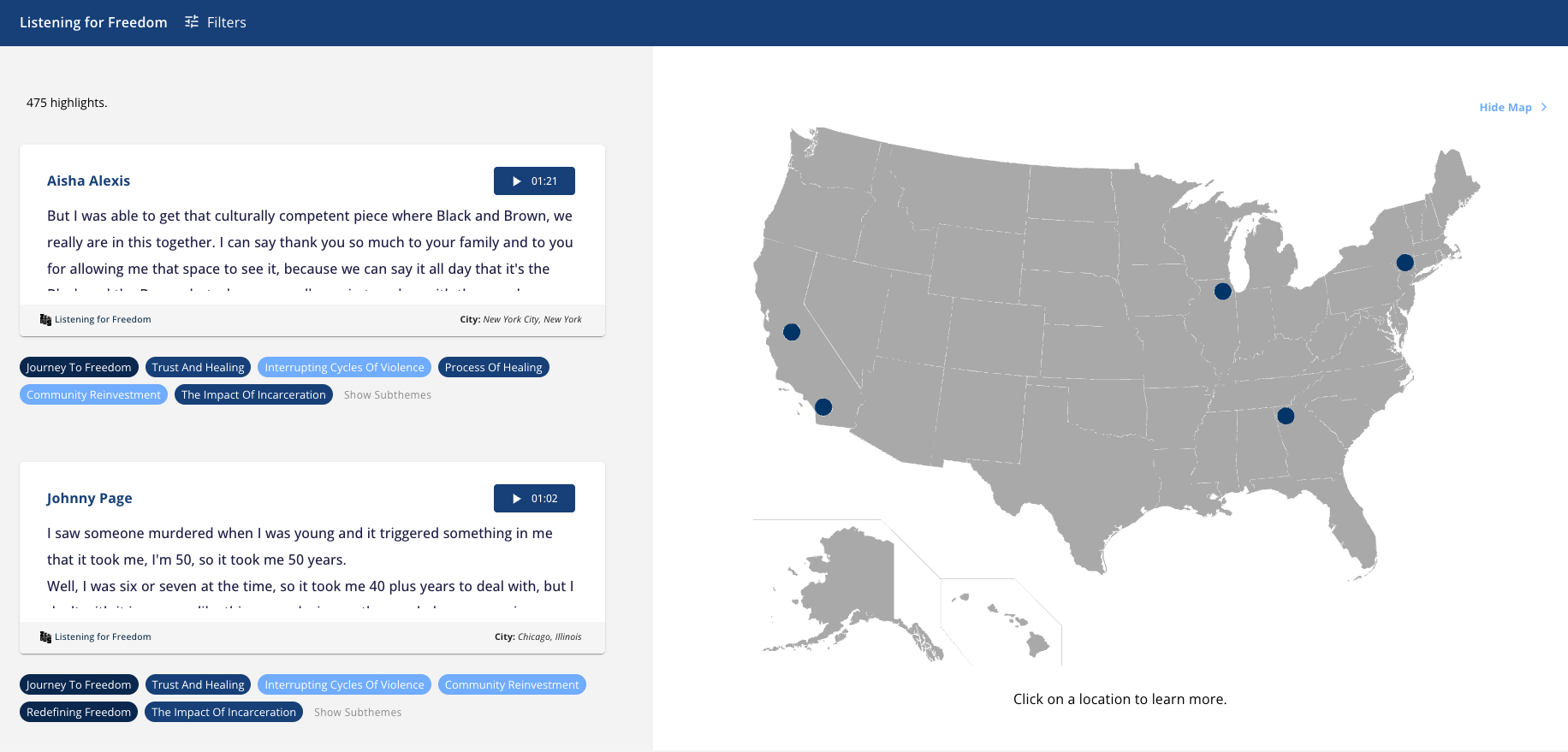
The public conversation about criminal justice is often loud, and often unreliable. It centers the sensational, flattens complexity, and barely makes room for the people who have moved through the system and understand it most intimately. Zealous, a national organization that builds the storytelling infrastructure movements need to shift narratives, set out to change that.

Zealous partnered with Cortico to bring structure and scale to the listening at the heart of their Freedom Stories initiative. Across six cities, Zealous Director of Storytelling and Media Production Asia Johnson facilitated small-group conversations with people directly impacted by the criminal legal system. Johnson’s approach was grounded in trust-building from the start, connecting with participants before sessions, and opening every conversation by answering the prompts herself.
Those conversations were recorded and uploaded to Cortico’s platform, where Zealous staff analyzed the collection, listening across cities, surfacing patterns, and organizing what emerged into powerful themes that could travel beyond the original conversations.
“This project took me into living rooms, community centers, churches, and neighborhoods across the country where people were doing the brave work of imagining freedom beyond the constraints of the systems designed to limit and marginalize. Cortico allowed us to do more than collect stories — it helped us identify the shared truths emerging across communities. What became possible was a public record of truth — a truth that honors the wisdom of those most impacted and invites the rest of us to rethink what freedom, safety, and belonging can be.” – Asia Johnson
The themes that surfaced don’t tend to make it into policy debates or news coverage. But they’re the ones that kept coming up: what freedom actually feels like after incarceration, what trust looks like when systems have repeatedly broken it, and what communities would do with resources currently spent on punishment. Those insights now live in the Listening for Freedom portal, a public collection of voices organized by theme and city, built for general audiences, lawmakers, and advocates who want to more deeply understand the criminal legal system from the inside out.
As Asia puts it: “These themes didn’t come from researchers — they emerged from the people themselves.”
 Facebook
 Twitter
 LinkedIn
